
Event Logic
The events are where the different subteams come together to form the complete autonomous driving system. This section describes the role of Path Planning in each event, including the algorithms used, how they interact with inputs from other subteams, and how they produce the trajectory and event logic required by the vehicle.
Acceleration
Section titled “Acceleration”Critical path planning differences:
- Track is straight — no curvature handling, no lap/state machine needed
- Two independent, selectable pipelines to reach a trajectory:
- Map-based: EKF localization + predefined trajectory (pre-mapped, pre-trajectoried)
- Perceptions-based: geometric midline built live from detected cone pairs, no localization required
- Termination is a single condition (end zone / finish-distance), not distance-to-lap tracking
Pipeline
Section titled “Pipeline”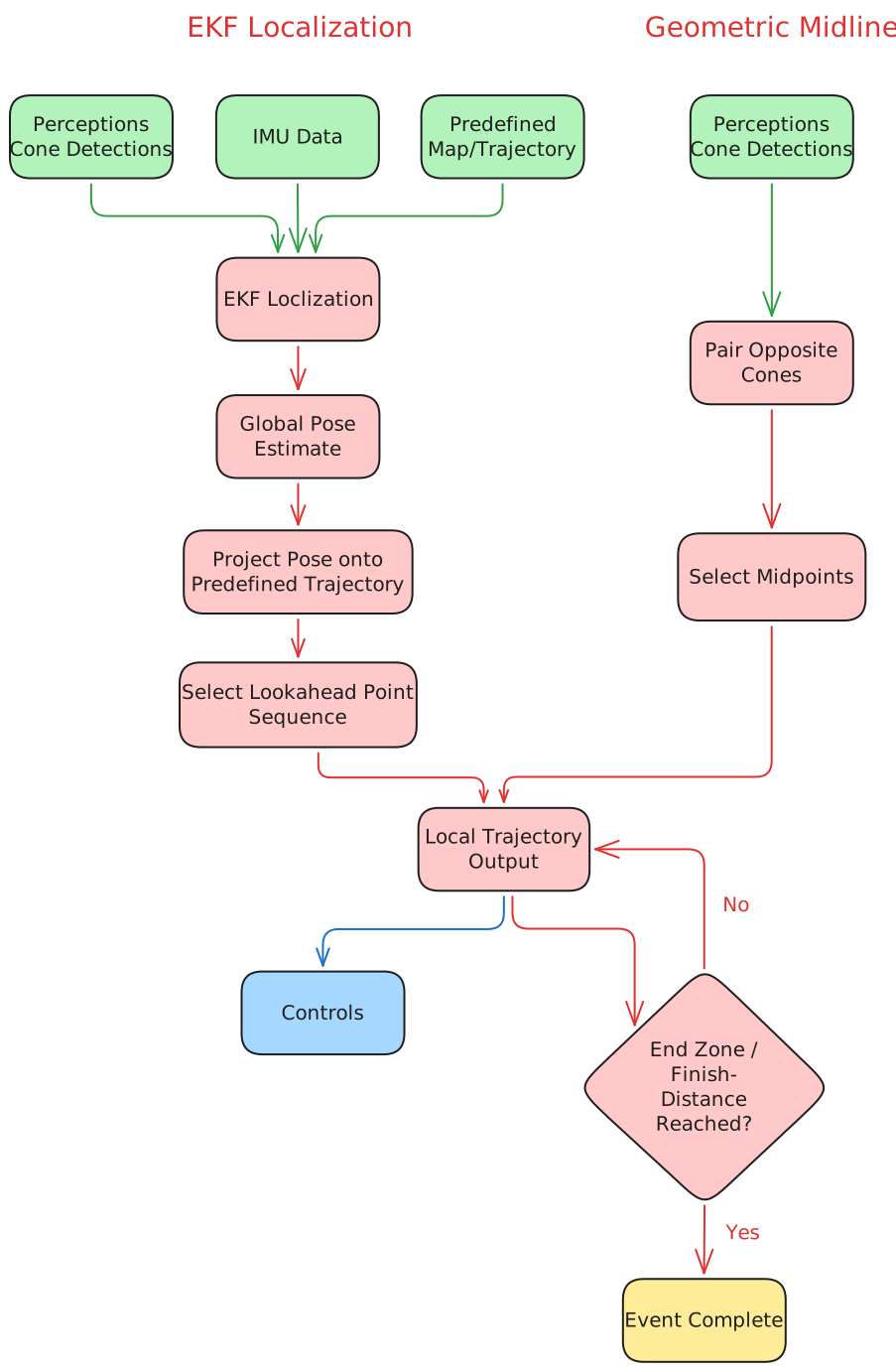
Autocross
Section titled “Autocross”Critical path planning differences:
- Fully perceptions-driven — no predefined map or localization dependency
- Input-dependent branch: colored cones go straight to pairing; uncolored cones require a recoloring step first
- Course completion is tracked by cumulative distance traveled against a length measured during the course walk (not a fixed finish line)
Pipeline
Section titled “Pipeline”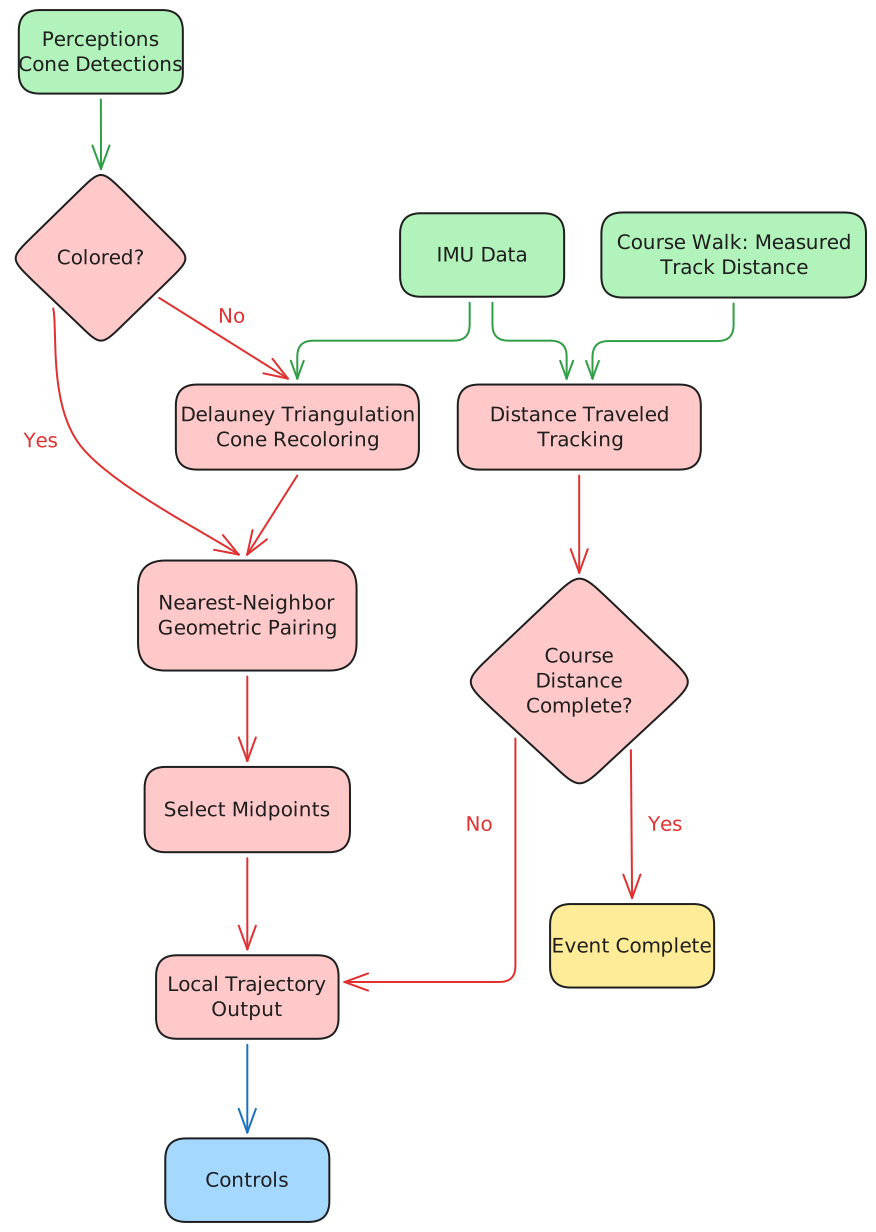
Notes:
- The recoloring step (Delaunay triangulation) is a fallback that only activates when Perceptions can’t supply cone colors directly — it sits upstream of the same pairing logic used for colored cones, so the rest of the pipeline is shared.
- Distance traveled is measured online and compared against the course length recorded during the walk-through, rather than detecting a physical finish line.
Trackdrive
Section titled “Trackdrive”This is identical to Autocross, only we count laps through distance traveled.
Skidpad
Section titled “Skidpad”Critical path planning differences:
- Fully map-based — relies on predefined track map + EKF localization, not live midline generation
- Adds a discrete state machine: lap/event state advances when the vehicle nears predefined transition points, rather than a continuous distance/lap check
- Trades adaptability for computational efficiency, assuming only small track-to-track geometry variation
Pipeline
Section titled “Pipeline”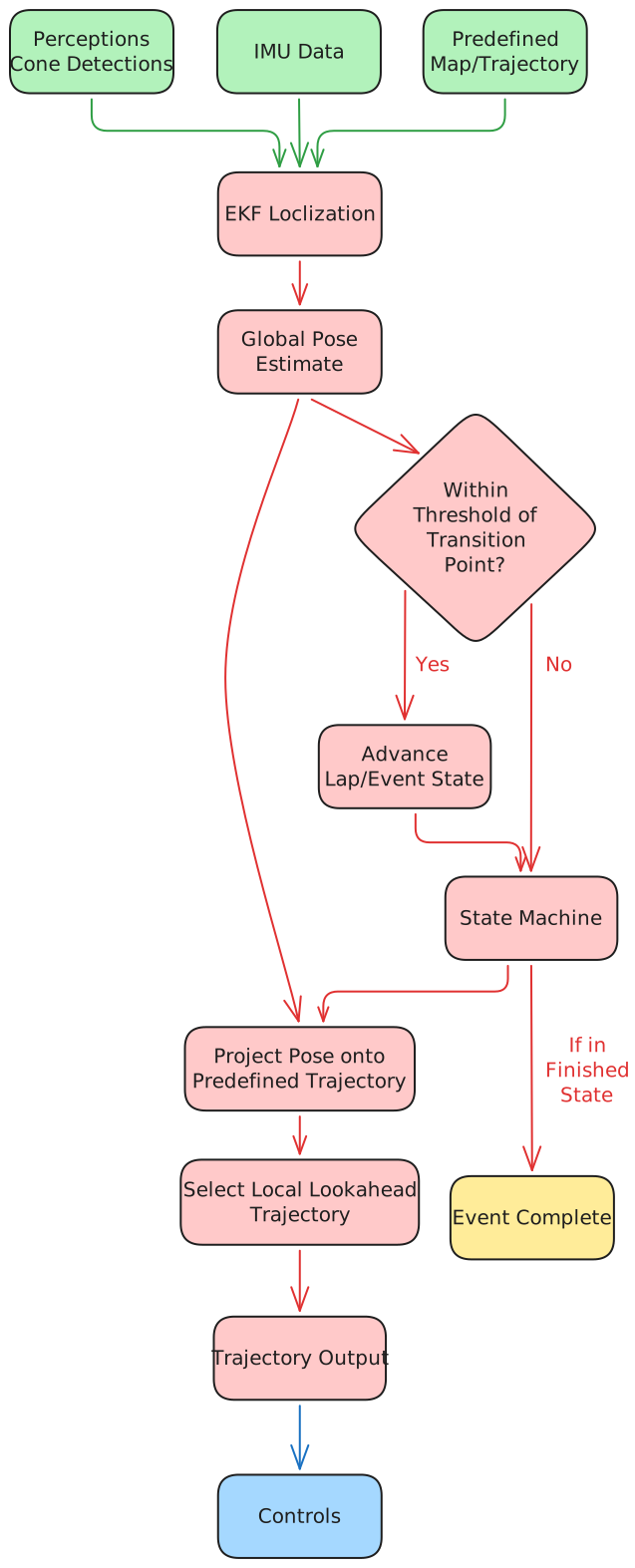
Notes:
- The state machine is the key structural addition versus Acceleration — it governs which segment of the predefined trajectory is active, based on proximity to hand-placed transition points rather than continuous distance tracking.
- The first run is done at reduced speed to prioritize completion, and the resulting sensor data is processed offline with SLAM to build a more accurate map. We then use a map-editing tool to incorporate that measured geometry into the predefined map and update the trajectory accordingly. This runs once and feeds back into the same
Predefined Map/Trajectoryblock used for localization, so subsequent runs get a corrected map and can be run faster. - Unlike Autocross/Trackdrive, Skidpad’s planning has no fallback for lost localization; it assumes the map and EKF pose estimate remain valid throughout.